Five Lessons from Five Years of NiaDelta
Reflections on organisational transformation, leadership, and enabling human flourishing.
Over the past five years, one of the greatest privileges of building NiaDelta has been the opportunity to journey alongside organisations, leaders, and teams across different sectors and geographies.
We have been invited into moments where leadership teams are wrestling with difficult questions about strategy, culture, and the future of their organisations. We have facilitated conversations where people pause long enough to reflect honestly on what is really happening within their organisations. And we have witnessed moments where teams rediscover alignment, clarity, and shared purpose.
At its heart, the work we do at NiaDelta is about enabling human flourishing within organisations - helping leaders and teams cultivate environments where people can do meaningful work together and where organisations can realise their full potential.
Five years into this journey, a number of lessons have surfaced repeatedly in our work. These insights have not emerged from theory alone, but from the lived experience of working alongside organisations navigating change.
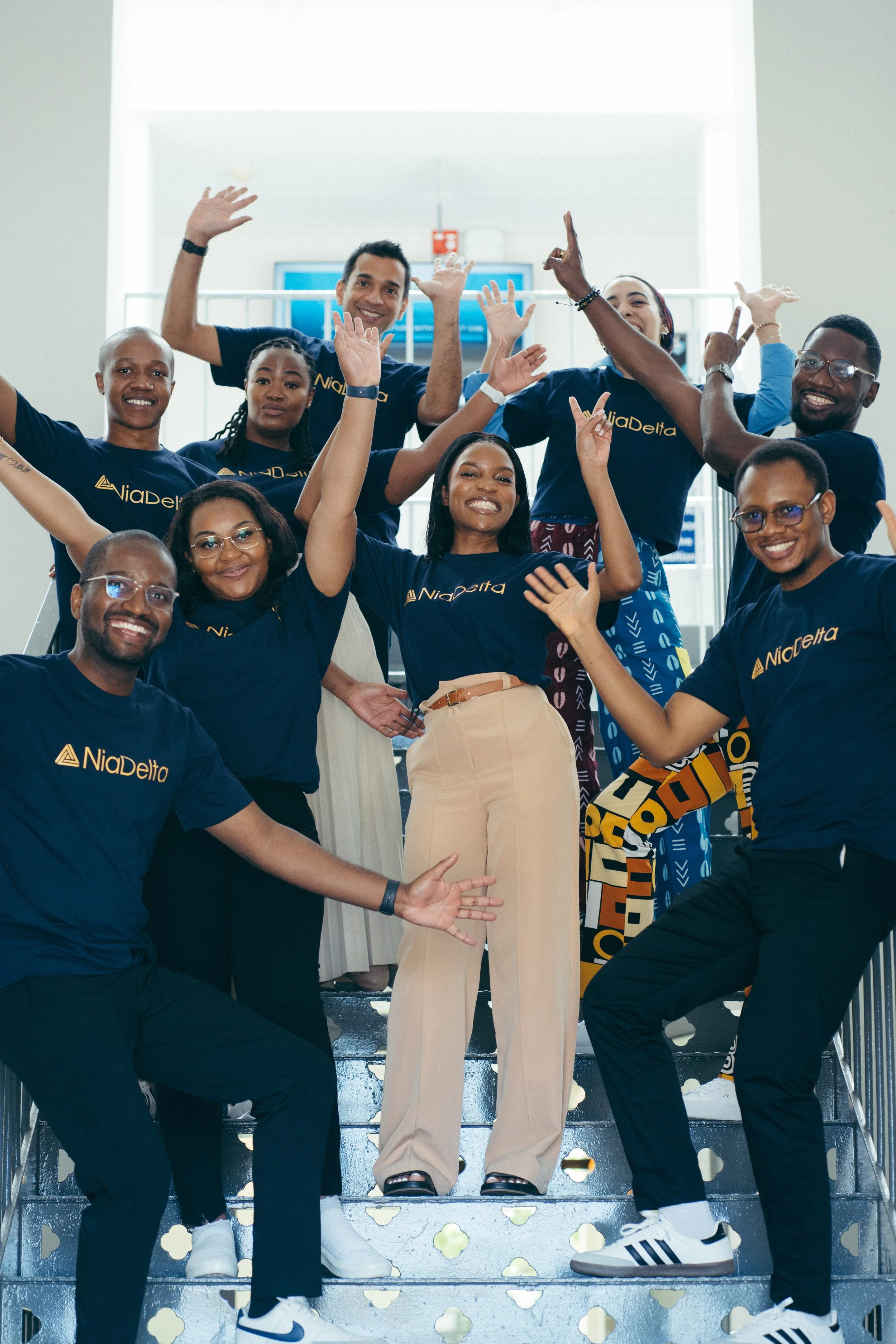
Here are five lessons from five years of NiaDelta:
1. Awareness Precedes Choice - and Choice Precedes Results
One of the most important lessons we have learned is that meaningful organisational transformation begins with awareness. Before organisations can change their results, they must first develop the ability to see themselves clearly.
In many organisations, leaders are working hard to improve outcomes: refining strategy, restructuring teams, or introducing new initiatives. Yet when the deeper dynamics within the organisation remain unseen or misunderstood, the decisions being made often fail to address the real challenges. When awareness is limited, the choices organisations make are limited as well.
Building awareness acts like holding up a mirror to the organisation. It allows leaders and teams to see their patterns of behaviour, the tensions that exist beneath the surface, and the realities that shape how people experience the organisation every day. Once that awareness exists, organisations begin to make more thoughtful and intentional choices. And when better choices are made consistently over time, better results begin to follow.
2. The Intelligence to Solve Organisational Challenges Already Exists Within the System
Another insight that has shaped our thinking is the recognition that the capability required to solve organisational challenges often already exists within the organisation itself.
The people who live and work within an organisation hold deep knowledge about its culture, its dynamics, and its possibilities. They understand the everyday realities of how the organisation operates in ways that external observers may not immediately see. Yet in many organisations, this intelligence remains underutilised.
Our work has increasingly focused on helping leaders create the conditions where this collective intelligence can emerge. This involves bringing people together in meaningful ways, creating spaces for honest dialogue, and facilitating reflection that allows individuals and teams to make sense of their shared reality. When organisations engage in this kind of collective sense-making, they often discover that many of the answers they are searching for already exist within the system itself.
Transformation that emerges from within the organisation, rather than being imposed from outside, tends to be more relevant, more widely owned, and ultimately more sustainable.
3. Misalignment Is More Expensive Than Most Organisations Realise
Across many of the organisations we work with, one challenge consistently sits beneath a wide range of organisational difficulties: misalignment.
Misalignment manifests in different ways. It may appear as communication breakdowns between teams, tensions within leadership groups, or uncertainty about priorities across the organisation. Sometimes it surfaces as a lack of trust or a disconnect between the values organisations espouse and the behaviours that people experience.
While these issues may initially seem cultural or relational in nature, their impact is often deeply operational. Misalignment slows down decision-making, weakens strategy execution, and creates friction between teams that should be collaborating. When leaders are not aligned around shared priorities and ways of working, the organisation begins to lose both momentum and coherence.
Over time, the cost of misalignment becomes significant - not only in terms of performance, but also in the erosion of trust and organisational energy. Aligning leaders and teams around shared meaning, shared priorities, and shared ways of working is therefore not simply a cultural aspiration. It is a strategic imperative for organisations seeking to operate effectively.
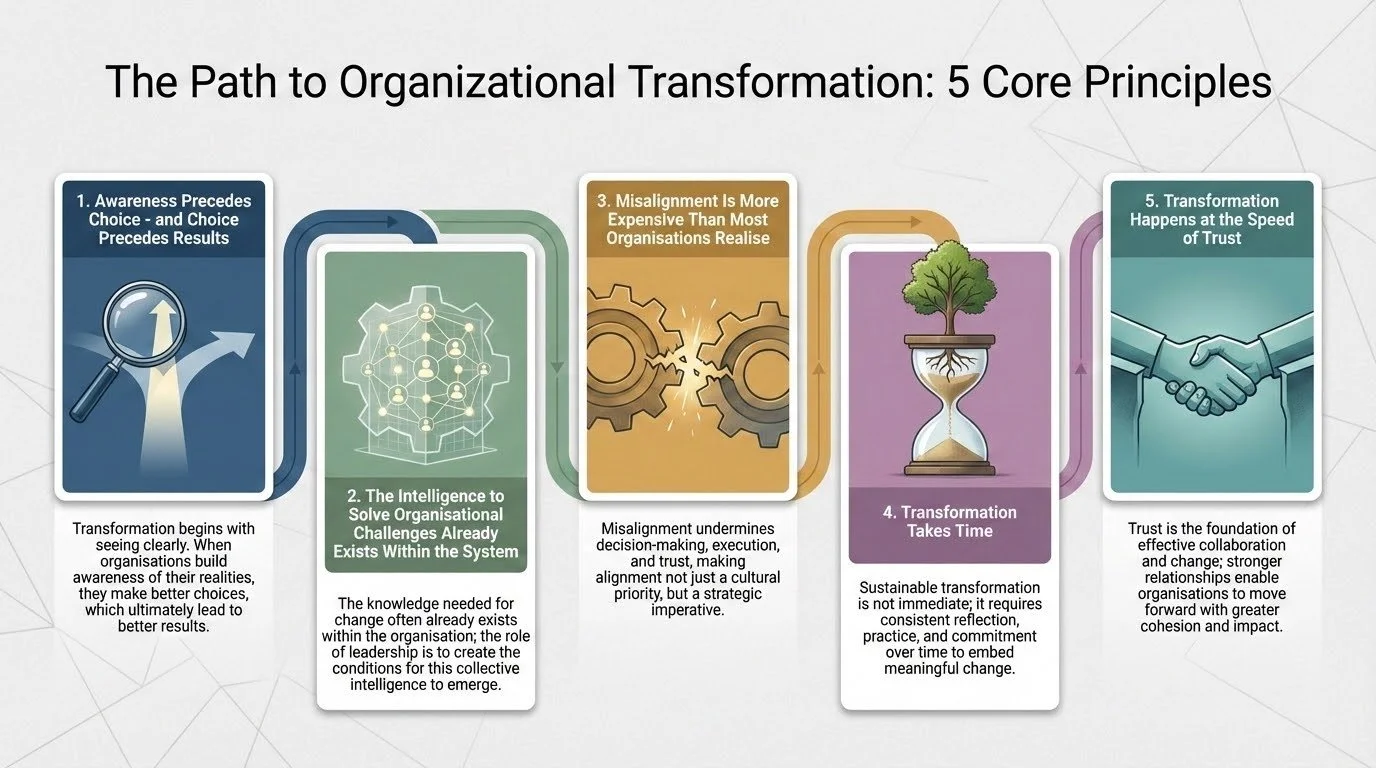
4. Transformation Takes Time
In a world that often prioritises speed and rapid results, one of the most humbling lessons from our work is that human and organisational transformation takes time.
There are certainly moments where interventions such as: workshops, retreats, or leadership programmes, can catalyse important shifts. These moments can open new conversations, surface hidden dynamics, and create momentum for change. But deep transformation, the kind that reshapes behaviour and culture, rarely happens overnight.
Human development requires cultivation. Trust must be built gradually. New habits must be practiced repeatedly before they become embedded in the culture of an organisation. Leaders and teams must learn, reflect, and adjust their ways of working over time.
Organisations that approach transformation as a long-term journey, rather than a quick intervention, tend to experience far more meaningful and sustainable change. Transformation is not a single event or programme, it is an ongoing process of learning, reflection, and growth.
5. Transformation Happens at the Speed of Trust
Perhaps one of the most profound lessons we have observed is the central role that relationships and trust play in organisational transformation.
Organisations are often described in terms of structures, strategies, and systems. Yet beneath all of these elements lies something far more human: the network of relationships that connects the people within the organisation. The quality of these relationships shapes how effectively people collaborate, how openly they communicate, and how willing they are to navigate difficult conversations together.
When trust is present, teams are able to engage with one another more honestly. Leaders are able to acknowledge challenges without fear, and individuals are more willing to contribute their perspectives and ideas. Trust creates the conditions where learning, adaptation, and innovation become possible.
In many ways, transformation happens at the speed of trust. When relational foundations are strong, organisations can move forward with greater confidence and cohesion. When those foundations are weak, even the most well-designed strategies struggle to gain traction. Investing in relationships - through dialogue, reflection, and intentional connection - is therefore not a peripheral activity. It is central to the work of organisational change.
Looking Ahead
Five years into this journey, we remain deeply grateful for the organisations and leaders who have invited us into their transformation journeys. Their courage to ask difficult questions, reflect honestly, and engage in meaningful change has shaped our own learning as much as any framework or methodology.
If these past years have taught us anything, it is that organisations flourish when they cultivate awareness, harness the intelligence of their people, build alignment, invest in relationships, and commit to the long journey of transformation.
Supporting organisations in that work continues to be one of the greatest privileges of what we do at NiaDelta.